

CENE Pioneer Artist / Founder • Contemporary Turkish Master Artist • Grand Artist Award Winner
First Turkish Female Naval Painter • MFA in Painting


Founder of
Conceptual Essence Narrative Expressionism (CENE)
Contemporary artist working at the intersection of intuitive painting, conceptual inquiry, and inner narrative.
Conceptual Essence Narrative Expressionism (CENE) – Manifesto and Art Philosophy
I am the pioneer of Conceptual Essence Narrative Expressionism (CENE). Through my paintings, I transform emotion, consciousness, and spiritual transformation into vivid visual forms. Each brushstroke carries an intuitive depth, reflecting the existential and energetic essence of memory, spirit, and self.
CENE is the intuitive expression emerging from the essence, grounded in conceptual thought and internalized narratives. It unites consciousness and the subconscious, dream and reality, the philosophical and abstract with the concrete, and individual awareness with collective experience in an essential manner. My art is a journey toward the essence, encompassing expression, discovery, healing, and inner transformation. This approach creates an experiential space beyond the canvas. The viewer shifts from a passive observer to an active participant, experiencing their own inner consciousness and collective memory, becoming their own inner witness.
CENE is more than a stylistic expression; it is a philosophy and a field of self-expression and inquiry. Colors function as energetic and emotional frequencies, forms represent emotional archetypes, and compositions capture the movements of consciousness. Each layer carries traces of past, present, and future intuitive experiences, vibrations of the spirit, and reflections of the self. Thus, individual experience attains a universal narrative, and art becomes a space of healing and awareness for both the creator and the viewer. The viewer experiences the work not merely as an object to observe but as a space that activates their own consciousness and emotions. Each work bridges individual consciousness and universal consciousness, turning art into both an inner exploration and a shared experience.
CENE transforms the multilayered influences of modern and contemporary art through its unique approach. It integrates the emotional intensity of Expressionism, the intellectual depth of Conceptual Art, and the existential dimension of personal narrative. By transcending abstract and figurative boundaries, it unites individual experience with collective memory and inner spirituality with cosmic thought.
The core purpose of CENE is to create a psychological, spiritual, and conceptual experiential field by connecting individual awareness and inner journey with universal themes and collective consciousness. This process deepens the self-awareness of both the artist and the viewer, demonstrating that art is an active, essential, conscious, and transformative experience.
Each brushstroke is not merely a visual element; it is an internal rhythm, a flow of consciousness, and a universal call. From this perspective, art functions both as an aesthetic experience and as an interdisciplinary field for research and expression. CENE bridges individual experience with collective consciousness and provides a comprehensive framework for both artistic creation and academic research.
Master Artist
Göknil Gümüş Sungurtekin
CENE
Conceptual Essence Narrative Expressionism (CENE) – Definition and Academic Positioning
Philosophical Framework and Artistic Practice
1. Conceptual and Essential Orientation Study
Conceptual Essence Narrative Expressionism (CENE) is an original artistic orientation developed by the artist Göknil Gümüş Sungurtekin, who has been engaged in painting since childhood, trained in the Bauhaus system at Marmara University Faculty of Fine Arts, and authored the master’s thesis Expressionism in Turkish Painting. CENE is an autonomous artistic direction, arising directly from the artist’s essence rather than external influences.
This artistic orientation goes beyond formal aesthetic pursuits to express emotional truth, intuitive consciousness, memory, archetypes, and metaphysical thought in a unified and original manner. CENE integrates the emotional intensity of Expressionism, the intellectual rigor of Conceptual Art, and the existential depth of personal narrative into a multi-layered and interdisciplinary approach.
CENE transcends traditional boundaries between abstraction and figuration, creating a symbolic and narrative language that connects individual experience with collective memory, inner spirituality with cosmic thought. It is not merely a technique or style; it is a philosophical and self-narrative artistic orientation, both a personal practice and an independent research field within contemporary art.
While engaging with the multi-layered influences of modern and contemporary art, CENE transforms individual experience into a universal and essential narrative rather than leaving it at the level of aesthetic object or expression. CENE positions itself as a conscious, essential dialogue, a healing and interactive process involving the viewer. Colors, energy flows in composition, and brushstrokes are considered within the framework of intuitive consciousness and spiritual vibrations. Each brushstroke is not only a visual element but also an inner rhythm, a flow of consciousness, and a universal call. The artist explores her essence while the viewer resonates with their inner experiences, becoming an active participant rather than a passive observer.
The primary aim of CENE is to create a psychological, spiritual, and conceptual experiential field by relating individual awareness and inner journeys to universal themes and collective consciousness. This process deepens both the artist’s and viewer’s self-awareness, offering a new inner experiential field within life and consciousness. CENE transforms individual narrative into universal resonance, demonstrating that art is an active, essential, conscious, and transformative experience.
CENE also plays with perceptions of time and space; artworks are nourished by traces of past experiences, calls from collective memory, and intuitive signals for the future. In this way, CENE transforms the artist’s subjective existence into a collective experience, opening the artwork as a medium of consciousness transfer, healing, and intuitive experience. This approach positions art not only as an aesthetic experience but also as an interdisciplinary field for research and expression. CENE establishes a bridge between individual experience and collective consciousness, offering a comprehensive framework for both artistic production and academic research.
The purpose of this research is to reveal the artistic, conceptual, and phenomenological dimensions of CENE, examining the interaction between the artist and the viewer in meaning-making. The study also discusses interdisciplinary approaches in painting and paradigm shifts in contemporary art. Furthermore, it aims to provide a methodological framework for self-narrative-based artistic practice for emerging artists and interdisciplinary studies.
2. Artist Statement – Techniques and Expression Strategies in Painting: CENE’s Distinctive Methodology
Artistic Purpose: CENE transforms intuition, memory, and existential inquiry into visual form. Art functions as a reflective and transformative medium between personal consciousness and collective human experience.
Methodology: The artist’s methodology is an approach that can be systematically articulated in both theoretical and practical dimensions and communicated to others. CENE establishes a conscious balance between individual inner experience and conceptual intent.
Intuitive-Conceptual Integration: Each visual decision is balanced between spontaneity and conceptual objectives. Spontaneity is directed to serve the essence of the narrative, while intuition merges with conceptual choices to create a unique rhythm in each work.
Gesture and Spontaneity: Unlike automatic expressionist gestures, CENE applies “guided spontaneity.” Intuitive movements are shaped in harmony with conceptual intent, so that each brushstroke becomes both an inner and intellectual means of expression.
Narrative and Time: In CENE works, past, present, and future converge not linearly but through a fragmented and circular understanding of time. The artworks offer temporal depth and continuity through multi-layered narratives.
Essential Expression: Existential narratives are developed through inner impulses and intuitive imagery. The works directly visualize the artist’s flow of consciousness and journey of essential discovery.
Material and Gesture: Layered paint applications and gestures concretize inner and psychological states. This approach simultaneously reflects temporal depth, psychological tension, and bodily engagement.
Narrative Structure: Works are designed as open-ended, temporal, and evolving narratives. These multi-layered narratives, constructed across past, present, and future, offer viewers an interactive experience.
Color, Symbolism, and Form: Vivid and dramatic palettes reflect emotional intensity while serving as conceptual markers. Colors carry both emotional and conceptual meaning, and archetypal motifs provide memory, ritual, and multi-dimensional interpretive possibilities.
Conclusion: CENE painting dissolves the boundaries between concept and emotion, individual and collective, narrative and abstraction. Each work transforms the artist’s inner essence into a living experience for both herself and the viewer through intuitive insight, philosophical inquiry, and technical precision.
3. Themes, Universal Dimension, and Conceptual Focus
Conceptual Essence Narrative Expressionism (CENE) is an original orientation that multilayeredly integrates the intellectual, emotional, and symbolic dimensions of contemporary art. CENE transcends the cold and detached approach of conceptual art by centering emotional intensity and intuitive guidance. Its aim is not to provide the viewer with a ready-made meaning, but to make the artist’s essence visible and shareable.
CENE combines the inner depths of individual essence, the archetypal symbols of the collective unconscious, and the critical framework of conceptual art. In doing so, the artist makes not only her own existence but also the cultural and spiritual layers of human history visible. A distinguishing feature of CENE is its equal positioning of thought and emotion: it is neither reduced to the emotional intensity of pure Expressionism nor to the rational distance of conceptual art. By bridging the two, it opens a new field of expression.
CENE engages with themes of memory, time, feminine energy, ritual, archetypes, the subconscious, transformation, and intuition. These themes activate both individual and collective psychological and spiritual experience fields. In the context of CENE, art functions not only aesthetically but also as a practice of transformation, healing, and universal resonance.
CENE’s distinctive methodology synthesizes historical and contemporary influences and places the artist’s self-awareness at the center. The process includes the following components:
Emotional-Conceptual Synthesis: Integrating Expressionist intensity with cognitive and philosophical rigor.
Intuitive Selection of Essence: Decisions regarding form, color, and composition are based on both intuitive and conceptual evaluation.
Narrative and Temporal Complexity: Works are constructed as open-ended narratives, generating multi-layered meanings encompassing past and present.
Collective Resonance: Individual expression is transformed into universal experience, creating a bridge between private introspection and shared human consciousness.
Metaphysical, Cosmic, and Quantum Dimensions: CENE proposes a language beyond materialist critique, founded on cosmic consciousness and existential vibrations. Each brushstroke is not merely a means of expression but an energy field reflecting the vibration of human existence. Parallel to quantum thought, subjective experience is linked to universal resonance.
3.1 Themes and Emotional Layers
CENE works are shaped around the following themes:
Memory and Remembrance: Time, transformation, intersections of past and present, and the merging of personal and collective moments.
Feminine Energy and Nature: Symbolic ritual, archetypes, and the unconscious; reflections of collective consciousness; mythological and Jungian references.
Existential Anxiety and Transformation: Cosmic consciousness, spiritual awareness, universal inquiries into human existence; themes of freedom, loss, and rebirth.
Emotional Range: Melancholy, joy, hope, delight, and sorrow; navigating between chaos and serenity, reflecting the interplay of inner and outer worlds.
3.2 Spirituality, Intuition, and Transformative Power in Art
CENE parallels Kandinsky’s “Spirituality in Art” and Paul Klee’s tradition of intuitive drawing; however, it reinterprets this legacy not merely aesthetically, but in the context of self-narrative and philosophical integrity.
Each work is conceived as an energy field arising from the artist’s intuitive visions. Therefore, in CENE, art is not only a visual experience but also a vehicle for healing, awareness, and spiritual transformation.
CENE’s visual language functions as a “psychic archaeology,” excavating layers of the subconscious and collective memory. The production process resembles an archaeological dig between the subconscious and cultural memory.
Warburg and Foucault Influences: Aby Warburg’s Pathosformel and Mnemosyne Atlas revive images of the past in a contemporary context, while Foucault’s concepts of archive and archaeology reveal the depths of individual and cultural memory.
Psychoanalytic Foundations: Freud’s dream interpretations and unconscious structures create multiple fields of reading. Jung’s concepts of archetypes and the collective unconscious make themes such as anima, animus, shadow, persona, and transformation visible within CENE’s symbolic language.
4. Art Historical and Contemporary Context
CENE interacts with both historical and contemporary art movements, transforming them through its own search for meaning and establishing a distinctive methodology:
Conceptual Art: CENE does not focus solely on intellectual abstraction; it prioritizes intuition and subjective experience.
Feminist Art Practices: Personal experience is transformed into universal themes through body, nature, ritual, and feminine energy.
Kandinsky’s Spirituality in Art: Musical harmony is achieved through color and rhythm, integrating with CENE’s effort to reach essential narrative via intuitive and conceptual choices. (CENE’s similarities and differences with historical art movements, as well as its distinctive qualities as an artistic orientation, are detailed in the attached document.)
5. Contemporary Art and Academic Research Context
Within the context of contemporary art, CENE can be considered alongside personal artistic philosophies such as Marina Abramović’s concept of “presence,” Olafur Eliasson’s “sensory activism,” and Hilma af Klint’s spiritual abstractions.
However, beyond these examples, CENE represents a comprehensive and systematic orientation. It positions itself not only as an aesthetic approach but also as a theoretical field that can be examined academically. In this regard, it can contribute to doctoral studies under the following headings:
Manifesto and Philosophical Framework: A systematic approach based on self-narrative, intuition, spirituality, and archetypes.
Art Historical Positioning: Relationships with Expressionism, Conceptual Art, Surrealism, and Feminist Art.
Pedagogical Potential: Production methods centered on intuition and self-narrative for students.
Digital Age Context: Interaction of self and consciousness exploration with contemporary digital visuals, creating new fields of expression.
6. The Role of the Artist and the Viewer
Artist Statement in the Context of Painting
“I am the pioneer of the Conceptual Essence Narrative Expressionism (CENE) orientation. Through my paintings, I transform emotions, stories, and transformations into vivid visual forms. Every brushstroke carries an intuitive depth—a reflection of memory, spirit, and self. My works are existential narratives. I believe art serves as a tool that connects the essence of existence, past and future, visible and invisible, individual and collective. I use colors and brushstrokes as energetic and emotional frequencies. Each composition becomes a multilayered narrative capturing the flow of consciousness—sometimes personal, sometimes collective. My art offers a bold space—authentic, intuitive, and sincere. It is a language of expression that reveals awareness of my emotions and both conscious and subconscious voices. CENE is the declaration of my artistic truth—a space where emotion meets concept and self meets canvas. It is an inner landscape seen on the path toward the essential.”
The Role of the Artist
The CENE artist is a creator, philosopher, and intuitive researcher. Guided by archetypes (Jung) and unconscious processes (Freud), they transform personal experiences, memories, and dreams into universal symbols and narratives.
The artist interprets subconscious processes, philosophically questions, and generates multilayered narratives.
Intuitive imagery is balanced with conceptual selectivity.
Each brushstroke and compositional choice produces a balanced, multilayered narrative between conceptual thought and spontaneous expression.
The Role of the Viewer
CENE works function as “living” open artworks; they interact with the viewer’s subconscious, memory, and perception, transforming the observer from passive to active participant.
The viewer contributes to meaning as it evolves dynamically over time.
In parallel with Umberto Eco’s concept of the “open work,” the artwork gains meaning together with the viewer and produces multiple layers of interpretation over time.
A shared, evolving experiential space is created between artist and viewer; the work integrates experience and narrative, forming a living system of meaning.
Summary and Conclusion
CENE engages in dialogue with modern and contemporary art through essential narrative, conceptual choice, and healing, interactive experience. The viewer is not passive but an active participant; individual awareness and inner journey merge with universal and spiritual themes.
7. Position in Art Research - A New Field of Research
CENE is not merely a style within contemporary art; it is a holistic language of existence. It integrates inner experience with conceptual thought; feminist energy with archetypal symbolism; psychoanalysis with the search for cosmic consciousness.
While connecting with major movements in art history (Expressionism, Surrealism, Conceptual Art, Feminist Art), CENE distinguishes itself through the coherence built around self-narrative, spirituality, essentiality, and storytelling.
It holds the potential to serve as a bridge in future art maps, carrying individual narrative into a universal symbolic language.
7.2 Change in Art and Paradigm Objective
CENE represents a synthesis of Expressionism and Conceptual Art in contemporary painting.
It centers on the interaction between individual self-expression and collective meaning-making.
Interdisciplinary approaches investigate the theoretical, aesthetic, and phenomenological dimensions of painting and integrate them into pedagogical processes.
Key Features:
Surpasses the objectivity of Minimalism and Conceptual Art. Translates feminist perspectives into a universal language. Integrates feminine energy, nature, ritual, and body themes with existential questions.
Establishes a creative dialogue between the artist’s self-expression and the viewer’s meaning-making, making individual and collective layers of consciousness visible This approach positions art not only as an aesthetic experience but also as an interdisciplinary field investigating inner awareness and universal human experience.
Conclusion
CENE opens a new interaction space between creation, perception, and interpretation, proposing a transformative paradigm at both individual and societal levels. It is not merely an artistic orientation but a new language of existence and a research framework for contemporary art discourse.
Pioneer and Developer: Göknil Gümüş Sungurtekin
The Conceptual and Artistic Dimension of CENE Through Its Similarities and Divergences in Art History
1. Introduction
Conceptual Essence Narrative Expressionism (CENE) does not merely synthesize the multi-layered influences of modern and contemporary art; it integrates essential narrative, intuitive orientation, and conceptual depth to construct a unique artistic language on both individual and universal levels.
This study examines CENE’s relationships with major art movements in art history—German Expressionism, Abstract Expressionism, Conceptual Art, Surrealism, and Feminist Art—as well as the points where it diverges from them. Furthermore, the conceptual and artistic dimension of CENE is articulated via its dialogue and interactions with artists such as Kandinsky, Rothko, Kiefer, Beuys, Bourgeois, Kahlo, Mendieta, Abramović, Van Gogh, Lautrec, and Basquiat.
CENE establishes a distinct position within art history and contemporary practice. While honoring the expressive and spiritual inquiries of Expressionism, embracing the intellectual clarity of postmodern Conceptual Art, and integrating the feminist, ritualistic, and archetypal concerns of the 20th and 21st centuries, its methodology prioritizes the artist’s inner essence. It fosters a dynamic and interpretative engagement with the viewer, positioning CENE as a unique practice that contributes to contemporary art discourse by uniting emotion, intellect, and existential reflection.
2. Position Within Art History – Dialogue with Contemporary Art
CENE establishes a connection with contemporary movements by integrating elements such as psychological depth, feminist perspectives, ritual and archetypal symbolism, and phenomenological consciousness. This positioning allows CENE to operate at the intersection of emotional, intellectual, and existential inquiry; its works are not only personal and universal but also conceptually robust. However, CENE is not identical to any of these movements or artists. Rather than eclectically copying elements from other art movements, it constructs a new coherence centered on self-narrative and spirituality. It moves beyond modernism’s pursuit of universality, engages with postmodern fragmented discourses, yet positions itself through the search for essential wholeness rather than irony or rupture.
Temporal and Narrative Layers: It produces multi-layered and evolving narratives by blending past, present, and future.
Essential Expression: Internal impulses and intuitive images are transformed into visual narratives with high experiential and philosophical intensity. CENE translates individual narrative into a universal language. While the artist channels inner spiritual and emotional impulses into visual form, the viewer interacts with these impulses through their own experiences. Each brushstroke generates vibrations that resonate with the essence of human existence, offering a unique contribution to contemporary art practice.
2.1. Connections with Modern Art – Historical Echoes and Divergences
Conceptual Essence Narrative Expressionism (CENE) engages in a nuanced dialogue with modern and contemporary art practices. While its foundation in Expressionism evokes the intense emotional articulation of early 20th-century European movements, its conceptual rigor parallels post-1960 Conceptual Art. Sensibilities such as color, rhythm, and musical analogy, observed in Kandinsky’s Concerning the Spiritual in Art, are also evident in CENE; however, CENE situates these formal explorations within a process centered on the artist’s spirituality, guided by essential and intuitive considerations, the expression of emotions through color, and an orientation toward existential awareness.
Although aligned with Expressionism’s tendency to foreground subjective experience, CENE works display a deliberate narrative structure and philosophical reflection. Unlike Kandinsky’s abstract spiritual approach or the intellectual detachment found in some Conceptual Art practices, CENE places the artist’s self-awareness at the center. Each work reveals both the artist’s inner essence and a reflection of collective human experience for the viewer.
CENE encompasses both points of convergence and divergence within art history, maintaining its own distinctive position.
2.1.1. German Expressionism – Die Brücke and Der Blaue Reiter Similarity:
Emphasizes emotional intensity and the inner world. Like Expressionism, CENE directly reveals the artist’s inner experience; the emotional intensity in CENE evokes Egon Schiele’s bodily distortions and Kandinsky’s color-rhythm harmonies.
Difference: CENE integrates emotions with collective consciousness and universal themes; brushwork and color choices are deliberate and conceptual.
Distinction: While Expressionism employs a dramatic and reactive language, CENE transforms this expression into a conscious, intuitive, and conceptual self-narrative.
2.2. Abstract Expressionism (Pollock, Rothko, De Kooning)
Similarity: Gestural movement and spiritual vibration; CENE shares common ground with Pollock’s gestural freedom and Rothko’s meditative color fields.
Difference: Emotional intensity is enriched with conceptual structures.
Distinction: While Abstract Expressionism prioritizes randomness, in CENE, color and form selections are guided by essential impulses and conceptual coherence; through “directed spontaneity,” subconscious energy is balanced with conceptual discernment.
2.3. Conceptual Art (Kosuth, Beuys)
Similarity: The conceptual approach is prioritized; the proposition “Art is an idea” is also significant in CENE.
Difference: In CENE, the concept is not merely intellectual; it enhances essential, intuitive, and spiritual experience.
Distinction: CENE transcends the often “cold” intellectuality of Conceptual Art, centering emotion, intuition, narrative, and spirituality within the conceptual framework.
2.4. Surrealism (Dali, Ernst, Breton)
Similarity: Employs subconscious and intuitive imagery.
Difference: The spontaneous chaos of Surrealist automatism is transformed in CENE into a deliberate and structured composition.
Distinction: Random production is absent; images are processed within a conceptual structure guided by intuitive direction and self-awareness, emphasizing healing and spiritual dimensions.
2.5. Neo-Expressionism and Contemporary Practices
The “new expressionism” that emerged globally from the 1980s resonates to some extent within CENE; however, CENE’s distinctiveness lies in addressing not only individual energy but also universal archetypes and essential narrative layers.
2.6. Narrative Art
Rather than fixed stories, CENE offers open-ended and evolving narratives. While drawing inspiration from these parallels, it establishes a language that centers the artist’s inner essence and the active participation of the viewer.
2.7. Symbolism
CENE shares affinities with metaphorical expression and archetypal symbols. Like the Symbolists of the 19th century, it engages with mythology, metaphor, and spiritual imagery; however, it is enriched with contemporary feminist and psychoanalytic layers.
CENE creates a symbolic and intuitive language that unites individual and universal narratives; the viewer experiences healing and spiritual engagement through this process.
3. Feminist Art Context
CENE presents an original approach by expanding the historical achievements of feminist art through an intuitive, spiritual, and universal dimension. The inner wounds of Louise Bourgeois, the corporeal suffering of Frida Kahlo, Ana Mendieta’s earth-body rituals, and Marina Abramović’s existential performances resonate within CENE’s memory. At the same time, it engages with Judy Chicago’s ritual practices reconstructing women’s history, Mendieta’s performances integrating nature and the body, Bourgeois’ sculptures with psychoanalytic depth, and Abramović’s boundary-pushing corporeal explorations.
CENE establishes an intuitive language that unites individual and universal narratives, allowing the viewer to experience healing and spiritual engagement. In this way, it parallels Frida Kahlo’s transformation of personal pain and identity motifs into a universal resonance, Mendieta’s ritualistic nature–body connections, and Bourgeois’ depth created through subconscious and archetypal imagery. Themes of trauma, the subconscious, emotional intensity, womanhood, and ritual are universalized in a feminist and ecological context within CENE. Furthermore, the intuitive and interactive dialogue CENE establishes with the viewer intersects with Abramović’s existential performances.
The feminist dimension of CENE integrates the experience of womanhood with archetypal, spiritual, and cosmic energy, extending beyond conventional gender politics. Womanhood, intuition, connection with nature, and cyclicality are placed at the center of the work both formally and conceptually. While feminist art often focuses on political or social identity, CENE does not treat womanhood merely as a matter of identity; it considers feminine energy as both an individual and universal creative force, integrating it with a source of spiritual existence, balance, creative power, harmony with nature, and universal cyclicality. In doing so, CENE transforms the visibility-focused struggle of feminist art into a broader dialogue with universal existence.
4. Psychoanalytic and Archetypal Layers
Psychoanalytic and Archetypal Layers
Freud’s concept of the unconscious and Jung’s archetypes occupy a central place in CENE’s essential narrative. Archetypes such as anima and animus, and the wounded healer, along with dream imagery and inner child symbols, link individual experience with the collective unconscious. CENE transcends the shadowy, dark, and trauma-focused domains of psychoanalytic art, giving priority to spiritual transformation and collective healing.
Similarity: The exploration of the individual subconscious, a hallmark of psychoanalytic art. Difference: CENE transforms these subconscious images into a universal narrative within an intuitive and conceptual framework, placing collective healing and inner transformation at the center.
5. East–West Cultural Connections
CENE interacts not only with Western modernism but also with the intuitive and ritualistic art traditions of the East:
Islamic miniatures: Symbolic layering
Shamanic art and rituals: Themes of transformation and healing
Japanese aesthetics: Concepts of emptiness (ma) and simplicity (wabi-sabi) These influences contribute to CENE’s development of a universal and cross-cultural artistic language.
Similarity: Symbolic layering, ritual, and aesthetic of emptiness.
Difference: By synthesizing with Western modernism, CENE creates an intuitive, conceptual, and universal experience, establishing a dialogue across cultural origins
6. Dialogue with Preceding Artists and CENE’s Original Position
CENE emerged in Göknil Gümüş Sungurtekin’s 25-year professional artistic practice primarily as the result of an internal, essential, and intuitive creative process. It is not an orientation designed by directly drawing inspiration from or following specific artists. The artist’s later conscious engagement with art history has made visible certain similarities between this original orientation and the works of some artists.
In this context: During her formal art education, artists who showed stylistic similarities to Sungurtekin’s work and were therefore carefully studied by her include Vincent van Gogh, Henri de Toulouse Lautrec, and Jean Michel Basquiat. These three figures, particularly in terms of expressionist style, left deep impressions in Sungurtekin’s memory and contributed to the formation of CENE from an Expressionist perspective. The narrative and expressionist dimensions of CENE resonate with these great artists, and their styles have artistically nourished Göknil Gümüş Sungurtekin in the creation of CENE.
Over the years, the artist’s conscious engagement with art history has revealed that certain aspects of CENE naturally parallel historical artists. As Sungurtekin developed her practice, she recognized these parallels and began to examine artists whose work echoed her own. In this context, the narrative and expressionist dimensions of CENE show affinities with major artists such as Wassily Kandinsky, Paul Klee, and Egon Schiele.
The orchestration of color choices and distribution in CENE, and the dialogue established with the viewer, show similarities to Kandinsky’s discussion in Concerning the Spiritual in Art, where colors are used like a musical orchestration. However, in CENE, color and rhythm are shaped emotionally and conceptually through the artist’s internal and intuitive choices. CENE contains childlike intuitions and symbolic narratives similar to those in Paul Klee; in CENE, these narratives merge with conceptual depth, bringing individual stories together with universal archetypes. The self-narrative intensity of CENE is similar to Egon Schiele’s emotionally charged expressions, intersecting with his approach; CENE provides a depth that situates individual concerns within a universal framework.
A particularly noteworthy artist is Anselm Kiefer, who serves as an important reference point in dialogue with CENE’s conceptual and self-narrative nature. Sungurtekin has studied Kiefer’s approach to history, memory, mythology, and existential layers.
CENE also references Judy Chicago’s visibility of women’s history, Ana Mendieta’s integration of nature and ritual through bodily performance, Louise Bourgeois’ psychoanalytically informed sculptures, and Frida Kahlo’s personal pain and identity motifs. Yet, it extends this trajectory to more cosmic and archetypal dimensions. These parallels show that while CENE resonates with these women artists, it simultaneously integrates healing and spiritual interaction through its intuitive and conceptual framework (for a detailed discussion of feminist artists and CENE’s dialogue with them, see Section 3: Feminist Art Context).
The conscious spaces established between the viewer and the intuitive-individual experiences in CENE show parallels with Joseph Beuys’ healing and socially conscious performances.
Finally, CENE’s approach, which combines intuition with conceptual depth, aligns with Mark Rothko’s pursuit of universal emotional resonance through color vibrations.
7. Points of Original Divergence
CENE’s Originality: Self Narrative: Places the artist’s self-awareness and the process of knowing - recognizing - being at the center.
Intuitive Conceptuality: Concepts are not solely intellectual; they are guided by intuitive and spiritual calling.
Memory and Transformation: Offers a multi-layered narrative that spans from individual experience to collective memory.
Light and Sharing: The purpose is not merely to show the work to the viewer, but to share the consciousness emerging from the artist’s essence as light and meaning.
Key Features that Distinguish CENE from Other Movements:
Union of Emotion and Concept: Integrates the intellectual framework of conceptual art with the emotional intensity of expressionism.
Intuitive Orientation: Formal arrangements are guided by intuitive choices arising from the artist’s inner call. Narrative and Archetypal Depth: Narratives extend from personal memory to universal mythology.
Spiritual and Ontological Dimension: Positions art at the intersection of existence, the unconscious, and cosmic energy.
CENE establishes a distinct position between art history and contemporary practices. It honors the expressive and spiritual inquiries of expressionism, embraces the intellectual clarity of postmodern conceptual art, and integrates the feminist, ritualistic, and archetypal concerns of the 20th-21st centuries. Above all, its methodology prioritizes the artist’s inner essence and fosters a dynamic, interpretative relationship with the viewer. This approach makes CENE a unique practice that contributes to contemporary art discourse by integrating emotion, intellect, and existential thought.
8. Conclusion
CENE differentiates itself as a unique orientation while establishing connections with various art movements in history. It bridges individual spirituality, the collective unconscious, and universal archetypes, transforming art into both an inner archaeology and a universal narrative.
It situates the emotional intensity inherited from Expressionism within a conceptual framework.
It differentiates the unconscious emphasis of Surrealism through dialogue between consciousness and the unconscious.
It transforms the intellectual structure of Conceptual Art by granting equal space to intuition and emotion. It expands feminist art beyond social critique, translating it into a universal and ritualistic dimension.
By combining archaeological and psychoanalytic depth, it creates a bridge between individual memory and the collective unconscious.
In conclusion, CENE represents a unique artistic orientation that bridges individual spirituality and universal consciousness, integrating intuition, concept, and emotion. This study aims to highlight CENE’s distinctive position in art history, its conceptual depth, and its expressive power.
Göknil Gümüş Sungurtekin
Master Artist | Founder of Conceptual Essence Narrative Expressionism (CENE)
Appendix 1: Conceptual Essence Narrative Expressionism (CENE)
Artistic Framework and Thematic Categories
This document presents the conceptual and thematic framework of Conceptual Essence Narrative Expressionism (CENE), the artistic approach developed by Göknil Gümüş Sungurtekin. Structured under six conceptual headings, the portfolio demonstrates how CENE integrates spirituality, psychology, feminine perspectives, archetypes, symbolism, abstraction, and spatial-energetic narration. Each category represents not only a thematic focus but also the artist’s methodology for transforming personal experiences, memories, and existential inquiries into visual narratives. This structure highlights the multi-layered scope of CENE and establishes its academic contribution to contemporary art discourse. CENE artworks invite the viewer into the most essential and concentrated moment of a process that began long ago within the artist: thoughts, dreams, and lived experiences are internalized, interpreted, and transformed into a symbolic visual language.
1) Spirituality, Emotionality, Subconscious, Psychological Depth, and Intuition
1.1) Warrior II
Warrior II by Göknil Gümüş Sungurtekin 2022, Turkey, Painting, Oil on Canvas Size: 130 W x 162 H x 2.5 D,
Exhibition: BIEAF 2024, BFAA, Old Future - Happiness - Busan BEXCO Exhibition Center, South Korea & "2024 Exhibition for Art Exchange with Foreing Sister City & Big Painting in Busan Fine Art Speak of Contemporary Art in Asia Artist selcted from BIEAF2024 Busan Metropolitan City Exhibition Hall For October 21 to 26, 2024

“Warrior II” is a powerful expressionist work dedicated to modern invisible warriors, emphasizing spiritual, emotional, and psychological resilience over physical battles. Layered textures, gestural brushstrokes, and dynamic color transitions convey wounds that remain unseen yet deeply felt, alongside vulnerability and inner strength. The painting embodies the core narrative and spiritual expression of CENE, reflecting the struggle to preserve authentic existence against societal pressures. Suppressed inner wounds transform into art through intuitive energy, turning personal struggle into a universal spiritual experience. Thick paint layers and dense textures express internal conflicts and psychological depth, while the figure’s stance is both defiant and introspective, embodying silent heroism. The work becomes a compelling exploration of femininity, individuality, and identity, illustrating how CENE merges narrative, psychology, and intuition into a cohesive visual discourse. Resonating with E.E. Cummings’ words—“to be nobody-but-yourself in a world which is doing its best, night and day, to make you everybody else — means to fight the hardest battle which any human being can fight”—the painting serves as both a tribute to resilience and a declaration of inner authenticity

1.2) Flavor Series - Warrior
FLAVOR SERIES - WARRIOR I by Göknil Gümüş Sungurtekin, 2002, Turkey Painting, Oil on Canvas, Size: 130 W x 150 H x 3 D cm, Exhibitions: Lezzet Workshop, İş Sanat Galleries, Collection: İş Bankası Art Collection, Catalog: "Lezzet" Sanata Yansıyan Tadlar
“Flavor Series: Warrior” is a powerful self-portrait by Göknil Gümüş Sungurtekin, realized in her signature expressionist style. The painting depicts the inner transformation of a warrior who rejects the role of victim and embraces her own inner strength, symbolizing the courage to assert existence beyond familial, societal, or artistic struggles. It exemplifies the self-narrative and conceptual essence of CENE, where the subconscious “victim” archetype is transfigured into a “warrior,” reflecting both intuitive and spiritual awakening. Through expressionist techniques—thick brushstrokes, dynamic color contrasts, and symbolic distortions—the work conveys psychological depth and emotional intensity. The posture and gaze embody empowerment, confronting collective subconscious wounds and transforming them into intuitive power. At its core, the painting represents self-rebirth, turning inner darkness into light, and stands as a vivid testament to the themes of identity, resilience, and spiritual strength that lie at the heart of CENE.
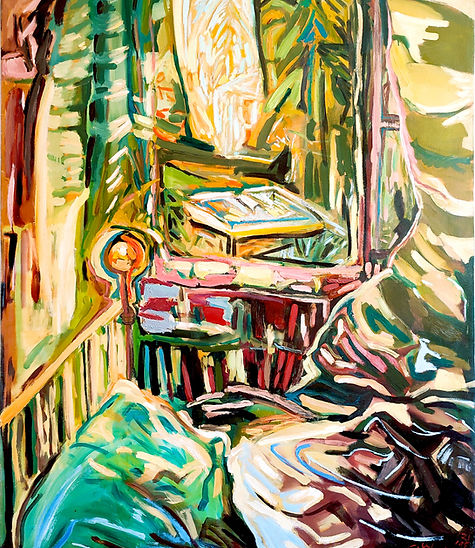
1.3) “Yalıboyu No:18”
Yalıboyu No:18, Yalıboyu No:18 Series by Göknil Gümüş Sungurtekin, 1999, Turkey, Painting, Oil on Canvas, Size: 130 W x 162.5 H x 3 D cm, Exhibition: "Momentary" Solo Exhibition, Turkey
“Yalıboyu No:18” (1999/2021) draws on childhood memories along Istanbul’s Yalıboyu Street, weaving personal memory with emotional and intuitive layers. Symbolic imagery of childhood merges with subconscious associations, creating a multi-layered self-narrative where the location becomes both a spiritual and psychological map. The garden reflects inner landscapes of childhood, solitude, play, and emotional refuge, while the window motif functions as a passage between conscious and subconscious energies. Fluid transitions of color and form visualize the fragile balance between remembrance and forgetting, transforming the painting into a mental and emotional state rather than a physical depiction. As a milestone in Göknil Gümüş Sungurtekin’s exploration of memory, belonging, and inner landscapes, the work embodies the essence of childhood as a source of identity and spiritual grounding, fully aligned with the principles of CENE’s self-narrative and emotional layering.
1.4)Let It Pass! From the Subconscious Pool - Yalıboyu No:18 Series
Let It Pass! From the Subconscious Pool - Yalıboyu No:18 Series, Yalıboyu No:18 Series by Göknil Gümüş Sungurtekin, 2024, Turkey, Painting, Oil on Canvas, Size: 100 W x 90 H x 3 D cm, Exhibition: BIEAF 2024, Old Future Present, Sea Gallery, Busan, South Korea
“Let It Pass! From the Subconscious Pool – Yalıboyu No:18 Series” transforms a traumatic childhood memory into intuitive freedom. Brushstrokes and colors, inspired by the calm evening pool of childhood, express emotions that reach beyond memory. Within the framework of CENE, the work represents a healing ritual and a deeply personal self-narrative, exploring layers of childhood trauma, subconscious memory, emotional release, and spiritual transformation. It exemplifies CENE’s potential for intuitive healing by turning repressed inner wounds into artistic expression.Conceptually, clouds function as metaphors for suppressed emotions and past pain, while their reflections in water symbolize the flow and release of subconscious thoughts. The painting visualizes a subconscious practice that allows trauma to surface and pass, inviting viewers into a state of presence where they can witness the transience of thoughts and emotions. In Göknil Gümüş Sungurtekin’s practice, it stands as a profound example of subconscious healing and intuitive expression, aligned with themes of psychological depth, memory, self-narrative, and spiritual renewal.

1.5) Love Exchange – Breath
Love Exchange - Breath , Self Portraits Series by Göknil Gümüş Sungurtekin, 2003, Turkey, Painting, Oil on Canvas, Size: 100 W x 120 H x 3 D cm
“Love Exchange – Breath” poetically transforms breathing into a metaphor for the exchange of love. The artist presents breath as a purification of mind, body, and spirit, expressing the cyclical energy of love and life through an expressionist visual language.Within CENE, the work expresses self-narrative and intuition, with breath symbolizing awareness, inner balance, and the transformation of love, integrating ritual symbolism and spiritual depth.Conceptually, breath functions as a metaphor for releasing suppressed emotions and circulating love. Abstract expressionist and pointillist techniques visualize energy, while dynamic brushwork conveys vibrational dynamics that mirror both physical and spiritual rhythms. Subconscious thoughts are presented as surfacing through breath, turning the act of inhaling and exhaling into an existential and intuitive practice. By merging intuition with spiritual awareness, it highlights the fundamental life energies of love, balance, and renewal—making it a vital contribution to both artistic discourse and academic portfolio contexts.
2) Feminine Energy, Womanhood, Nature, and Ritual Expression
This category explores how feminine experience, intertwined with nature and ritual imagery, generates symbolic narratives. It examines both individual and collective archetypes of womanhood through the CENE framework, highlighting intuition, memory, and transformative energy.

2.1) Root – Flavor Series
Root- Flavor Series by Göknil Gümüş Sungurtekin, 2002,Turkey, Painting, Oil on Canvas, Size: 140 W x 140 H x 3 D cm, Exhibitions: BIEAF 2023, Top World Artist Award, Laham Gallery, Busan, South Korea, 2002, Flavor Workshop, İş Sanat Galleries ,Istanbul, Turkey, Catalog: “Lezzet” Sanata Yansıyan Tadlar
Root – Flavor Series embodies feminine creative power and memory through a holistic metaphor of nature. The central abstract form evokes the maternal body and the primal experiences of taste, touch, and memory, intertwining themes of motherhood, earth, rooting, and transformation. Within the framework of Conceptual Essence Narrative Expressionism (CENE), the work engages with self-narrative and intuitive consciousness, where sensory memory converges with the artist’s imagery of the “first root” as a symbol of feminine and generative energy. Drawing from Fauvist-inspired expressionism, dynamic brushstrokes, organic rhythms, and vibrant color contrasts create heightened sensory intensity, while the central form emerges as an archetype of feminine power. Expressed as both spiritual and cultural, this feminine energy venerates the essence of female creativity, embodying the ritualistic, natural, and transformative dimensions that lie at the core of CENE.

2.2) Alavera Dalavera
Alavera Dalavera by Göknil Gümüş Sungurtekin 2017, Turkey, Painting, Oil on Canvas, Size: 140 W x 160 H x 3 D cm, Exhibitions: 2017 Enigma Exhibition, Niş Art Gallery, Istanbul, Turkey,
Collection: Arnd Hesseler Art Collection, Germany
The artist depicted the figures in the painting inspired by Nurhan Damcıoğlu, the queen of Turkish kanto, and Seyfi Dursunoğlu, famously known as Huysuz Virjin (Dark Quine). Alavera Dalavera takes its name from a kanto song. From the Ottoman to the Republican era, stage arts were prohibited for Muslim women. This painting captures the collective feminine energy of two masters of the Canton stage between the 1970s and 2000s, and through the lens of CENE, it integrates historical memory with intuitive narrative, reflecting women’s courageous struggles, ritualized feminine energy, joy, and modes of self-expression. Expressionist and theatrical techniques, including vibrant colors and figures depicted with ironic heroism, evoke stage-like lighting and ritualistic, carnival-like energy. Conceptually, the stage becomes a sacred space for female identity, humor, and ritual, expressed through gestures conveying empowerment, joy, satire, and continuity.

2.3) Operation
Operation Painting by Göknil Gümüş Sungurtekin , 1999, Turkey, Painting, Oil on Canvas, Size: 120 W x 140 H x 3 D cm,2001 Exbitions: 2001, "Momentary" Solo Exhibition, Turkey Collection: Pink October Art Collection, Singulart
Inspired by the artist’s emotional response to her mother’s breast cancer surgery, this painting transforms trauma into artistic healing, addressing both individual and collective female experiences while advocating inner strength and resilience. It integrates CENE’s essential and narrative dimensions, externalizing emotional trauma as ritualized art that demonstrates narrative healing and intuitive expression. Expressionist brushwork, emotive color transitions, and conceptual metaphors depict body and spirit as wounded yet reborn, with pink and blue tones symbolizing femininity, compassion, and healing. The work redefines the female body and illness as sites of creative and restorative power, illustrating the transformation of physical and emotional trauma through internal ritual, where feminine energy appears as a regenerative force and maternal imagery reflects natural cycles of destruction, rebirth, and restoration.

2.4) Mezzaluna 00 – Composition 3 Mezzaluna 00 Composition 3 by Göknil Gümüş Sungurtekin, 2000, Turkey, Painting, Oil on Canvas, Size: 50 W x 50 H x 2.5 D cm, Exhibition: Mezzaluna Workshop 2000, Collection: Mezzaluna Restaurants Art Collection
This work explores womanhood, motherhood, nature, and ritual cycles, using symbols such as maternal milk and female productivity to reflect societal gender roles, ritual, and intuitive narrative. It exemplifies CENE’s conceptual and intuitive layers, transforming personal memory into a universal symbolic narrative that highlights spirituality, ritual, and gender critique. Crescent moon and mezzaluna knife motifs evoke cycles and creation, while intuitive brushwork conveys sacred and maternal energy; the color palette and forms suggest ritualistic and cosmic symbolism, referencing the Greek myth of Hera breastfeeding Hercules and her milk spreading across the sky to create the Milky Way. The painting illuminates motherhood and female labor as life-giving yet socially exploited forces, combining feminist inquiry with nature and ritual. Conceptually, it examines the sacred feminine connection to nature and ritual, linking maternal imagery to biological and social structures and emphasizing both empowerment and historical critique of female labor and creativity
3. Essence – Narrative, Inner, and Life-Based Expression
Autobiographical narratives drawn from the artist’s personal history, memories, and experiences form the foundation of this category. In CENE, these stories create an introspective bridge, transforming the personal into a universal inquiry and tracing an inner journey where the awareness of essence emerges, consciously or unconsciously. Freud’s theories on consciousness and the unconscious suggest that human behavior unfolds through dual processes of thought and action: sometimes action precedes awareness, while at other times conscious reflection guides movement. CENE mirrors this interplay, integrating conscious and unconscious layers to render the essence of experience visible through artistic expression.

3.1) Unfinished Laughter
Unfinished Laughter by Göknil Gümüş Sungurtekin, 2022, Turkey, Painting, Oil on Canvas, Size: 130 W x 160 H x 3 D cm, Collection: Singulart, A Table
Unfinished Laughter (2022, Oil on Canvas, 130x160 cm) explores the delicate balance between personal loss, memory, and the joy of life, created after the artist’s mother’s passing. Through intuitive color and form, the work transforms personal trauma into a universal spiritual experience, blending tragedy with humor and embedding collective cultural codes. The “unfinished laughter” embodies suspended joy at moments when life pauses without ceasing, while shared childhood meals, laughter, and ironic dialogues with her mother are ritually reenacted, reflecting the Turkish tradition of communal tables and restorative humor. Closed with Baki’s verses—“Âvâzeyi bu âleme Davud gibi sal / Bâkî kalan bu kubbede bir hoş sadâ imiş” (“Let your voice echo in this world like David, what remains in this dome is but a pleasing sound”)—the painting emphasizes memory’s enduring echo and continuity, exemplifying CENE’s narrative and introspective approach to inner, life-oriented expression.
3.2) Armchair Series
Armchair Series by Göknil Gümüş Sungurtekin, 2000, Turkey, Painting, Oil on Canvas, Size: 140 W x 160 H x 3 D cm, Exhibitions: 2000, 2nd International Student Triennale, Marmara University Faculty of Fine Arts Student Affairs, Toprakbank Art Galleries; 2002, "Momentary" Solo Exhibition, Turkey


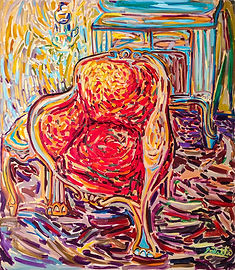

The Armchair Series (2000, Oil on Canvas, 140x160 cm) engages the artist’s childhood memories, household objects, and family members as formative sources of creativity. Each armchair functions as a “symbol of power,” intertwining personal memories with collective symbolism to explore the roots of artistic identity. The series exemplifies Conceptual Essence Narrative Expressionism (CENE) by merging individual experiences with universal archetypes. Here, the armchair transcends its role as a mere object, becoming a vessel for memory, art, and the cycles of life, reinforcing CENE’s “inner narrative” dimension and visually embodying the artist’s inquiry into essence, story, and existence. Through images arising from personal memory, household objects and family members—the “silent witnesses” of childhood—plant the earliest seeds of creative consciousness, transforming private experience into a profound exploration of the genetic, cultural, and social origins of creativity. Each armchair presents a narrative of life, memory, and essence, demonstrating CENE’s integration of introspection and symbolism. In detail, Armchair I cultivates imagination through radio plays, sowing the first seeds of artistic development; Armchair II depicts the symbolic figure of the neighbor aunt, who inspired the artist’s education, seated as an emblem of enlightened consciousness; Armchair III presents an empty armchair as a symbolic space for the future and untold stories while reflecting the mother’s knitting ritual, evoking silence, patience, and continuity in creativity; and Armchair IV features the uncle’s accordion as a powerful emblem of genetic inheritance in music, painting, and design. The series functions both as a personal memory journal and a universal inquiry into creation, visually articulating the artist’s inner narrative through CENE’s conceptual lens
3.3) Home – Yalıboyu No:18 Series
Home - Yalıboyu No:18 Series, Göknil Gümüş Sungurtekin, Painting, Oil on Canvas, Size: 142 W x 122 H x 3 D cm,
Home – Yalıboyu No:18 Series (Oil on Canvas, 142x122x3 cm) serves as a visual diary of the artist’s childhood and sense of belonging, inspired by a garden estate along Yalıboyu Street in Istanbul. It portrays not only a physical space but also the emotional and sensory imprints of memory. The work embodies CENE’s narrative, intuitive, and essential dimensions, translating memories through visual, auditory, and olfactory cues. By blending reality with imagination, it reveals layered temporal and emotional experiences: the sounds of cicadas, boat rides, children at play, and Müzeyyen Senar’s voice coalesce into a “memory symphony.” Expressive brushstrokes and vivid colors depict gardens, rooms, and window views at both tangible and dreamlike levels, turning childhood into a collective and personal source of identity and spiritual grounding. The painting invites viewers to reconnect with their inner “home,” evoking nostalgia and existential awareness, and highlighting CENE’s capacity to transform memory into universal narrative. Conceptually, it functions as a symbolic map of the artist’s inner longing and sense of belonging, where garden games, summer cinemas, floral scents, and Istanbul’s landscape as seen through a child’s eyes reconstruct her connection to the essential self through intuitive imagery. Beyond personal nostalgia, the narrative offers a universal call to rediscover one’s inner “home.”

3.4) Self Portrait
Self-portrait I by Göknil Gümüş Sungurtekin , 2000, Turkey, Painting, Oil on Canvas, Size: 140 W x 160 H x 3 D cm, Self Portraits Series, 2002 "Momentary" Solo Exhibition, Turkey
“Self-Portrait I “ is an expressionist exploration of the artist’s introspective journey into fear, identity, and the subconscious. The work embodies CENE’s core essence, transforming internal confrontation and spiritual experience into abstract, intuitive expression. It reveals the “felt” beneath the “visible,” reflecting both personal experience and collective unconscious, and functions as a spiritual map and essential expression of universal introspection. Conceptually, the painting captures the artist at her most vulnerable and authentic, turning the gaze inward while layering themes of childhood, the subconscious, fear, repressed memory, and identity inquiry. The dialogue between body and soul is rendered through performance, intuition, and unconscious processing. Self-Portrait I asks not only, “Who am I?” but also, “What am I, what do I contend with, and which fears shape me?” More than a self-portrait, it is a spiritual map and an essential expression of both personal and universal introspection.

3.5) Toro I
Toro I by Göknil Gümüş Sungurtekin , 2002, Turkey, Painting, Oil on Canvas, Size: 70 W x 90 H x 2.5 D cm, Toro Series: Toro Painting, With Galeri Gaudi Exhibitions:Momentary Solo Exhibition, Galeri Artist, Istanbul (2002) Berliner Liste, Galeri Gaudi, Berlin, Germany (2017) Donostiartean Art Fair, Galeri Gaudi, San Sebastián, Spain (2017)
Toro I ( Valentine Series) presents a deeply personal narrative of love, pain, deception, and inner transformation. Centered on the bull as a metaphor, it explores Jungian archetypes—particularly the “wounded healer”—where the wounded feminine psyche (anima) evolves into resilience and inner strength, symbolizing emotional maturity and spiritual growth through the cycles of love. The painting embodies CENE’s narrative and intuitive dimensions, translating the journey through love’s traumatic cycles into spiritual cleansing via figurative symbolism layered with abstract color fields. The artist’s experiential memory drives the conceptual narrative, turning personal breaking points into a philosophical story of metamorphosis. Bold, dynamic brushstrokes and a fauvist palette of reds, blues, and oranges evoke passion, anger, wounding, and healing simultaneously. The bull embodies both raw endurance and inner vulnerability, while the composition captures the oscillation of spiritual struggle at emotional extremes. By shifting focus from romantic success or failure to confronting and accepting personal wounds, the work channels cycles of pain toward purification—cleansing rage, releasing anger, and embracing acts of bond healing, cord cutting, and self-forgiveness. Needle and sword motifs symbolize recurrent relational wounds, yet these experiences become a source of collective intuitive wisdom. Love, in Toro I, emerges not merely as emotion but as an existential teacher. Through this concentrated symbolic narrative, the painting manifests the essence of CENE: the integration of personal experience, intuitive insight, and spiritual transformation.

3.6) Time of Love – From 22 & 23 July Series (Time of Love – Spring)
Time of Love - Spring - From 22 & 23 July Series by Göknil Gümüş Sungurtekin, 2006, Turkey Drawing, Marker on Paper, Size: 75 W x 75 H x 6 D cm Series: 22 and 23 July Series Exhibitions & Collections: Aşık ile Maşuk – Metamorphosis – Similar to Each Other Drawing, Lola Rose Grand Mezze, Thompson Palm Spring Hyatt Hotel, Palm Springs, USA
Time of Love – From 22 & 23 July Series (Time of Love – Spring) transforms the artist’s personal threshold—her birthday—into a meditation on inner awakening and the regenerative power of love. July 22–23 becomes both a literal date and a symbolic passage of rebirth, renewal, and spiritual blossoming, with spring serving as a metaphor for the soft, intuitive, and regenerative essence of love. The drawing reflects CENE’s intuitive and essential dimensions through a minimalist aesthetic, turning personal memory into a symbolic language that extends toward the collective unconscious. Embracing simplicity and stillness, minimalist lines and symbolic forms evoke the quiet unfolding of emotions, akin to flowers blooming in an inner spring garden, capturing subtle awakening rather than dramatic expression. The work emphasizes that love emerges not only in relationships but also from the individual’s emotional, spiritual, and astrological connection to the self, presenting love as a state of being where past, present, and future converge. Visually and conceptually, the piece embodies a threshold in the artist’s life cycle—a moment of self-reconnection and spiritual renewal vibrating with love. The drawing merges personal and collective memory, interweaving astrological and symbolic references, and demonstrates that love is a multidimensional connection with life, time, and the self, making it a profound expression of narrative, inner, and life-based exploration within CENE.
Drawings By Göknil Gümüş Sungurtekin & 22 And 23 July By Göknil Gümüş This drawing series, described as “clay tablets of the subconscious,” reflects an expressive descent into imagination, life’s questions, subconscious responses, and the articulation of complex emotions. Figures reminiscent of anime-inspired archetypes emerge as symbols of inner and collective worlds, embodying both inquiry and resolution.
The conceptual foundation rests on collective feminine energy, the subconscious, global life, and cosmic perception. With the quintessential expressionist stance—“I feel this”—Sungurtekin dives into her inner depths, unearthing hidden treasures and presenting them directly to the viewer through a single, unbroken line. Formally, the works combine immediacy and directness with an architectural, minimalist, and symbolic narrative. This fusion with expressionist intensity transforms the drawings into vessels of the subconscious: intimate yet universal, personal yet archetypal. These works stand as manifestations of Sungurtekin’s subconscious archive, where spontaneity, symbolism, and emotional force converge. They also exemplify an early articulation of her conceptual-expressive approach within Conceptual Essence Narrative Expressionism (CENE), highlighting how intuition, symbolic form, and narrative energy merge in visual language.
4) Archetypal, Mythological, Philosophical, Symbolic, and Metaphysical Expression Mythological and archetypal figures intertwine with philosophical and metaphysical inquiries to create multilayered symbolic structures. This category reveals the dialogue that CENE establishes with cultural memory and universal consciousness.

4.1) Crocodile Man And Swan Woman
Crocodile Man And Swan Woman by Göknil Gümüş Sungurtekin , Turkey Painting, Oil on Canvas, Size: 163 W x 130 H x 3 D cm
Crocodile Man and Swan Woman is a metaphysical investigation of unseen balances in relationships through archetypal contrasts, where the Crocodile Man embodies strategy, patience, and the shadowed dimensions of the mind, and the Swan Woman reflects purity, emotional grace, and intuitive openness, prompting the question: “Is everything as it appears, or is there an unseen bridge underlying relationships?” The painting exemplifies Conceptual Essence Narrative Expressionism (CENE) by fusing conceptual symbolism with inner psychological experience, balancing conscious and unconscious, masculine and feminine, rational and emotional poles. Sungurtekin’s expressive brushwork conveys tangible forms alongside the subtle vibrations of the subconscious, rendering both tension and harmony as a visual poem. The Crocodile Man symbolizes intellect, strategy, and introspective observation, while the Swan Woman glides with grace, compassion, and openness, together evoking the interplay of opposites and the anima–animus dynamic within the human psyche. Drawing on ancient symbolism, the Crocodile represents wisdom, patience, and underworld power, while the Swan embodies feminine intuition, love, and inner beauty; together, they manifest metaphysical equilibrium—intellect and heart, strength and grace—illustrating CENE’s archetypal, mythological, and metaphysical dimensions in their purest form
4.2) Island and Man Series ISLAND AND MAN SERIES by Göknil Gümüş Sungurtekin ,2000 Turkey Painting, Oil on Canvas, Size: 40 W x 80 H x 2.5 D cm Exhibitions: Tayfun Erdoğmuş atölyesi 1 = Tayfun Erdoğmuş studio exhibition1 1997-200- Ahu Antmen - Galeri Dürer,Goethe-Institut İstanbul,Türkiye, Exhibitions:Momentary Solo Exhibition, Galeri Artist, Istanbul (2002) , Art For Good Project Tuğçe Dursun Sanat Koleksiyonu, USA


Island and Man Series is a philosophical trilogy of paintings deeply rooted in archetypal and metaphysical layers, inspired by the life and intellectual legacy of Friedrich Nietzsche. The series exemplifies the conceptual depth, spiritual intuition, and symbolic storytelling at the heart of Conceptual Essence Narrative Expressionism (CENE), with the “island” serving as a metaphor for mental, emotional, and existential isolation, and the “man” representing the individual in pursuit of truth, navigating both personal and collective consciousness. Part I – The Beginning of Solitude and Inner Exile portrays Nietzsche’s intellectual solitude and alienation, where the island symbolizes withdrawal from the external world and a metaphorical inner exile. Dense textures and deep blues and blacks evoke stillness and inward reflection, capturing not only the philosopher’s experience but the universal condition of being misunderstood and the pursuit of self-discovery. Part II – Acceptance of Silence and Inner Balance reflects the transition from existential struggle to tranquility, transforming the island into a space of inner peace and self-acceptance. Calm waters, softened skies, and a warmer palette signify centeredness and equilibrium, visually manifesting CENE’s principles of self-awareness and the quieting of existence. Part III – Transformation, Reflection, and Mythical Encounter reimagines Nietzsche’s Turin scene with the flogged horse, which symbolizes suffering, spiritual recognition, and transformative empathy. The island becomes a mythological bridge connecting human and animal, intellect and intuition, consciousness and unconsciousness. Earthy tones accented with silver create a timeless, philosophical threshold, narrating metamorphosis rather than collapse, while the horse embodies inner purpose, life mission, and the “self” one seeks to realize—a symbolic guide toward personal fulfillment. The series constructs a universal narrative of human existence that, while rooted in Nietzsche, transcends historical specificity. Solitude, acceptance, and transformation form its conceptual axis, inviting viewers to explore their own inner terrain, confront both wounding and healing aspects of the self, and engage with Nietzsche’s figure as an archetype of humanity’s pursuit of truth and self-realization. Through CENE’s lens, Sungurtekin integrates psychological depth, symbolic language, and philosophical inquiry, encouraging the audience to experience each painting individually or as a sequential journey, discovering their own “island” and “horse” as embodiments of inner purpose, personal aspiration, and life mission.

4.3) Nietzsche’s Watching Nietzsche's Watching - Island And Man Series by Göknil Gümüş Sungurtekin, 2017 Turkey, Painting, Oil on Canvas, Size: 120 W x 100 H x 3 D cm, Island And Man Series
Nietzsche’s Watching , part of the Island and Man Series, is inspired by the famous incident in which Nietzsche embraced a horse being whipped before collapsing in an act of profound empathy. Sungurtekin expands this historical moment into a broader philosophical and metaphysical inquiry: just as Nietzsche empathizes with the suffering of the horse, he simultaneously becomes an observer of his own life and existence, contemplating the human condition at large. The work references the concept of “read slow beauty,” suggesting that true meaning and understanding arise through patient, deliberate observation of life’s unfolding.
The painting embodies the philosophical and metaphysical essence of Conceptual Essence Narrative Expressionism (CENE) by transforming a deeply personal interpretation into a universal inquiry: If we could observe ourselves from the outside, could we encounter meaning and beauty in a different way? Emotional intensity, symbolic visualization, and conceptual depth converge here as defining qualities of CENE’s narrative force.
Executed in an expressionist style with abstract-surrealist undertones, the work layers textures, melancholic blues, earthy tones, and a contemplative atmosphere to evoke Nietzsche’s intellectual and emotional landscape. Dynamic brushstrokes reveal the interplay of conscious and unconscious processes, while figures and landscapes merge into a composition that is simultaneously concrete and dreamlike, metaphorically translating the theme of the “observing eye.”
The significance of Nietzsche’s Watching transcends historical anecdote, unfolding into a universal meditation on empathy, identity, and self-observation. The painting visualizes Nietzsche’s lifelong philosophical questions—“being oneself” and “finding oneself”—as a manifesto of reflection and self-understanding. By uniting empathy, observation, and equilibrium, it resonates powerfully within both individual and collective consciousness.
From an archetypal and symbolic perspective, Nietzsche’s empathy with the horse is interpreted as both historical and metaphysical. In mythology, the horse represents freedom, strength, and the bearer of spirit. Within this work, Nietzsche becomes both participant and witness, embodying the paradox of freedom, suffering, and existence through his act of observation. The metaphor of “read slow beauty” amplifies the wisdom that emerges when life is perceived not only from within its turbulence but also as an external witness.
Through its symbolic and philosophical language, Nietzsche’s Watching bridges rational thought with intuitive perception, conscious awareness with unconscious resonance, standing as a profound embodiment of the metaphysical and narrative power of CENE.
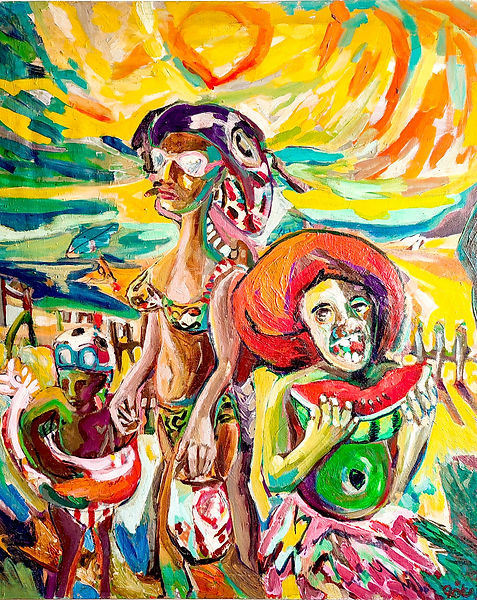
4.4)Unfortunately No Watermelon Left To You!
Unfortunately No Watermelon Left To You ! by Göknil Gümüş Sungurtekin , 2006-2021, Turkey, Painting, Oil on Canvas, Size: 100 W x 120 H x 3 D cm, Exhibitions:Momentary Solo Exhibition, Galeri Artist, Istanbul (2002), Collection: Contemporary Turkish Artist, Singulart 2019, Art For Good Project
“Unfortunately No Watermelon Left To You!” is inspired by the artist’s childhood summer vacations and rooted in the notion that “childhood is a homeland.” The work juxtaposes the innocence and joy of childhood with the inevitable absences and ironies of adulthood. Its title resonates unexpectedly with Carl Gustav Jung’s phrase, “Unfortunately no watermelon for you,” illustrating how the collective unconscious can surface through artistic intuition. The watermelon motif—traditionally associated with fertility, abundance, refreshment, and summer joy—is subverted by the ironic title, turning nostalgia into reflection. Childhood becomes framed as a homeland, a space of belonging and inner security, while its inevitable losses mark the transition into adulthood. The intuitive connection to Jung elevates this personal narrative into an archetypal dimension, where individual memory resonates with collective symbolism. Beyond its symbolic depth, the painting carries a social layer. As part of the Art For Good Project, proceeds are donated to children, reinforcing art’s role as both memory and responsibility. Through this layered structure, Unfortunately No Watermelon Left To You! bridges the personal and the collective, memory and irony, joy and absence—embodying the early spirit of CENE as a union of expressive and conceptual narrative. As an early example of Conceptual Essence Narrative Expressionism (CENE), the painting fuses narrative irony with an expressive visual language, transforming personal memory into a universal dialogue.

4.5) Respect for Lautrec III
Respect for Lautrec III by Göknil Gümüş Sungurtekin, 1999 - 2022,Turkey, Painting, Oil on Canvas, Size: 100 W x 120 H x 2.5 D cm Collection: Respect for Lautrec Series
Respect for Lautrec III explores female archetypes and their tensions with societal expectations, revisiting the dualities of the “bitch” and the “virgin” through lenses of freedom, inner balance, and self-acceptance. Created over two decades and paying homage to Lautrec, the work simultaneously functions as a contemporary feminist manifesto, examining the multiplicity of women’s social and psychological identities. Exemplifying Conceptual Essence Narrative Expressionism (CENE), the painting traces the journey from imposed roles toward authentic self-realization, merging personal memory, archetypal imagery, and collective unconscious resonance. The Matryoshka motif symbolizes layered internal exploration, reinforcing CENE’s integration of inner narrative, symbolic depth, and psychological inquiry. Expressive brushwork and conceptual density articulate the tension and transformation within the figures, while a color palette balancing vivid tones and dark contrasts evokes freedom, identity-seeking, and the constraints of social imposition. Archetypal opposites converge and diverge, illustrating the dialectical interplay between societal expectations and spiritual liberation. Conceptually, the work engages Jungian notions of shadow and anima, enacting a mythological “layer-opening” ritual that progressively reveals the woman’s inner essence. Metaphysically, it gestures toward liberation from social and spiritual constraints; philosophically, it constructs a framework wherein essence emerges from reconciling opposites. Mythologically, the integration signals rebirth, presenting the woman as both protective and transformative, embodying CENE’s fusion of archetypal, symbolic, and metaphysical inquiry.
5. Conceptuality and Expressionism
This category brings together works where the artist’s conceptual investigations intersect with expressive techniques. It highlights the experimental dimension of CENE, in which intellectual depth and philosophical inquiry are embodied through dynamic, emotive brushwork. These works transform abstract ideas into tangible visual forms, allowing thought and feeling to coexist in a layered, immersive experience.

5.1 Respect Street for Fikret Mualla Respect Street For Fikret Mualla by Göknil Gümüş Sungurtekin , 2003, Turkey, Painting, Oil on Canvas, Size: 169 W x 151 H x 3 D cm BIEAF World Artist 10 List
This painting constitutes a conceptual homage to Fikret Mualla (1903–1967), a seminal figure of Turkish Expressionism. Reinterpreting his poignant statement—“I never found a warm home in Istanbul or Paris”—the artist constructs an imagined “street of belonging” in which friendships, unfulfilled loves, dreams, and memories are symbolically gathered. Within the theoretical framework of Conceptual Essence Narrative Expressionism (CENE), the work merges biographical essence with symbolic reconstruction: Mualla’s existential solitude and longing for home are articulated as the central essence, while figures, objects, and chromatic gestures organize into a layered narrative that transcends biography and enters the domain of collective cultural memory. Executed in oil with vigorous brushwork and a palette resonant with Mualla’s own—vivid reds, yellows, blues, and greens—the composition assumes a quasi-theatrical structure, unfolding as a symbolic tableau. Iconographic references function as nodes of meaning: Fikret Adil, represented with carnations and wine, symbolizes friendship; Semiha Berksoy embodies unrequited love; the “Leblebici” graffiti recalls ironic estrangement; cigarette butts signal both habit and temporal passage; maternal figures and childhood motifs allude to loss, longing, and memory of nurture. Café signs and playful women reference exile and irony, while balloons ascending skyward index Mualla’s enduring childlike spirit. Through this symbolic reconstruction, Sungurtekin transforms the artist’s personal biography into a transgenerational dialogue within Turkish modern art, situating Mualla’s life within a universal discourse of belonging, solitude, nostalgia, and resilience. The work exemplifies the CENE triad of essence–narrative–expression, reconciling conceptual depth with expressionist gesture and demonstrating how individual memory may be transfigured into collective cultural consciousness

5.2) HAT & PERA Installation (2004) HAT & PERA Installation by Göknil Gümüş Sungurtekin, 2004, Turkey, Installation, Oil on Hat, Size: 3 W x 7 H x 2 D M , 35 hats, Curator Marcus Graf, Stratejiler No: Mekan & Form Exhibition
A large-scale installation of 35 painted hats documenting Istanbul’s cultural transformations around the historic Pera district. Combining archival gravures, photographs, and expressive painting, the hats act as “time vessels” connecting past rituals with contemporary identity. Exhibited in galleries, international collections, Eurovision (2004), and the film Sis ve Gece (2007), the installation remains a living cultural narrative
HAT & PERA - GALATA by Göknil Gümüş Sungurtekin, 2004,Turkey, Installation, Oil on Textile Size: 26 W x 26 H x 14 D cm, Private Art Collection , USA


2004 Strategies No:2 “Space and Form” Siemens Art Gallery / Istanbul, Turkey, Space & Form Exhibition 2004, Siemens Art Gallery Exhibition Catalog: Parçalanmış Gerçekler = Fragmented-Realities Güncel sanat = Contemporary art. 14, "Sis ve Gece" Movie - Director: Turgut Yasalar, All artworks and images in this film belong to Göknil Gümüş Sungurtekin, Infinite Art: Hakan Özoğuz Art Collection, Athena - For Real - Türkiye 🇹🇷 - Grand Final Eurovision 2004, Hat & Pera - Installation Series, 2004,
HAT & PERA (Installation, 2004)
HAT & PERA is a large-scale conceptual installation consisting of thirty-five painted hats, each transformed into a vessel of memory, narrative, and cultural reflection. Rooted in the historic Pera district—modern-day Taksim—the work examines Istanbul’s socio-cultural transformations over the last eighty years. Using oil painting, collage, and assemblage, Göknil Gümüş Sungurtekin inscribes onto hats archival gravures, historical photographs, and contemporary images. These layered surfaces establish a dialogue between the lost rituals of elegance and civility once associated with Pera and the fragmented realities of today’s accelerated urban fabric. Within the framework of Conceptual Essence Narrative Expressionism (CENE), the installation operates as a temporal bridge: the essence lies in Pera’s collective memory and cultural codes of civility, while the narrative unfolds through the juxtaposition of historical and contemporary imagery. The hat, once a performative emblem of ritual and social belonging, becomes here a symbolic medium of transition and passage. Through expressive painterly gestures and symbolic layering, each object transcends its materiality, transforming into a performative carrier of identity and memory. Formally, HAT & PERA employs a hybrid visual language that fuses painting, collage, and assemblage. The hats act as three-dimensional canvases, where archival fragments meet expressionist brushwork. The dense detail of each object contrasts with the poetic unity of the ensemble, creating an installation that is simultaneously nostalgic and contemporary, personal and urban. The work occupies a pivotal place in contemporary Turkish art by interrogating cultural memory while preserving disappearing rituals. Its visibility also extended beyond the gallery space: one of the hats was famously worn by musician Hakan Özoğuz during Turkey’s 2004 Eurovision performance, and the full ensemble appeared in director Turgut Yasalar’s film Sis ve Gece (2007), adapted from Ahmet Ümit’s novel. As individual hats entered international collections, the artist has maintained the symbolic total of thirty-five by producing new works, thus preserving the installation’s conceptual integrity. Through its conceptual layering, HAT & PERA reactivates urban memory and re-signifies ritual. By embedding architectural fragments, symbolic gestures, and socio-cultural shifts onto its surfaces, the installation transforms the everyday object into a metaphysical medium of narration, embodying the essence of CENE: the fusion of memory, narrative, and expression
“I’ll Take My Jacket and Go – Last One in, Close the Door!” Installation ,Borusan Art Gallery (2001)


I'll Take My Jacket And I'will Go - Let the Last Comer Close The Door! Installation I'll Take My Jacket And I'will Go Let The Last Comer Close The Door! Installation by Göknil Gümüş Sungurtekin 2001, Turkey, Oil on Fabric, Size: 70 W x 100 H x 20 D cm, 6 Pieces Jackets, Turkey, Poster: New Proposals & New Suggestions 7, Borusan, July 27 – September 10, 2001 Featured in Marie Claire (Aug. 2001), Amica (Aug. 2001), Istanbul Life (Aug. 2001). Media coverage on NTV, CNN Türk, and BC TV. Included in the film “Sis ve Gece” (2007, directed by Turgut Yasalar, adapted from Ahmet Ümit’s novel).
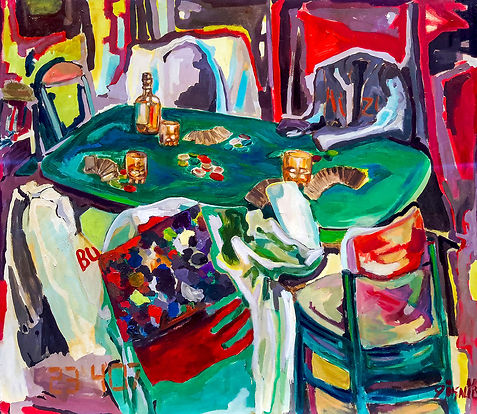
RISING VALUE – I’ll Take My Jacket and I’ll Go RISING VALUE – I’ll Take My Jacket and I’ll Go by Göknil Gümüş Sungurtekin , 2001, Turkey, Installation (Oil on Canvas & Painted Jackets), 160 × 140 × 3 cm, Exhibited in “New Suggestions, New Proposals 7 – YÖYÖ,” Borusan Art Gallery, Istanbul. Featured in Marie Claire (Aug. 2001), Amica (Aug. 2001), Istanbul Life (Aug. 2001), media coverage on NTV & CNN Türk,Salt Research Archive Included in the film “Sis ve Gece” (2007).
“I’ll Take My Jacket and Go – Last One in, Close the Door!” (2001)
Göknil Gümüş Sungurtekin’s conceptual installation was created during a period of intensified migration, when questions of separation, belonging, and identity were pressing both socially and personally. The work interrogates the dilemma: “If memories, relationships, and values travel with me, is departure ever truly possible?” The ironic subtitle “Last one in, close the door!” becomes a metaphor for both individual and collective thresholds, simultaneously marking an ending and a transition.
Comprising six painted jackets and one canvas, the installation embodies the principles of Conceptual Essence Narrative Expressionism (CENE) by merging personal narrative, symbolic expression, and conceptual inquiry. Each jacket functions as a vessel of memory and identity—at once an “armor of selfhood” and “luggage of departure.” Arranged around a table like poker players, these jackets—inscribed with concepts, writings, images, and assemblages—stage a metaphorical game of chance, where a whiskey bottle symbolizes life’s unpredictable gains and losses. Expressionist brushstrokes rendered on wearable surfaces intensify the psychological depth, transforming inner conflict into a universal allegory.
First exhibited at Borusan Art Gallery in 2001, the work attracted significant media attention in Istanbul Life, Marie Claire, and Amica, as well as on NTV and CNN Türk, and was later featured in Turgut Yasalar’s film Sis ve Gece. By treating migration as both a physical displacement and a metaphysical passage, the installation reframes the struggle for authenticity and continuity in the face of change.
By uniting conceptual rigor with expressionist intensity, Sungurtekin transforms a deeply personal, memory-driven question into a universal meditation on belonging, identity, and resilience. The installation stands as a critical marker of early-2000s Turkish conceptual art, articulating the enduring tension between leaving and remaining, risk and rootedness, departure and return.

My Mom and City’s Streets (2001)
My Mom And City's Streets Installation by Göknil Gümüş Sungurtekin , 2001, Turkey, Installation, Oil on Fabric, Size: 70 W x 100 H x 20 D cm.

This work intertwines maternal memory with Istanbul’s urban fabric, questioning the bond between personal roots and collective identity. Painted jackets function as both archives of individual history and symbolic carriers of the city. Within the framework of CENE, personal narrative becomes a universal metaphor, where the existential tension between “leaving” and “staying” is revealed through the archetypes of motherhood and the city. I'll Take My Jacket And I'will Go Let The Last Comer Close The Door! Installation
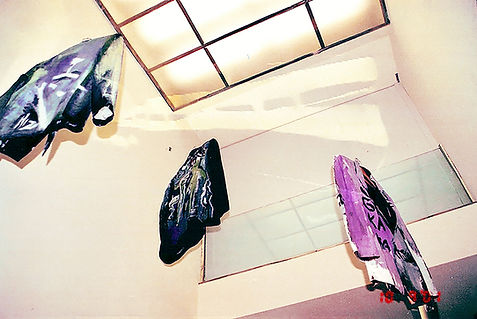
Sadness, Night and Dance (2001) Sadness, Night and Dance Installation by Göknil Gümüş Sungurtekin , 2001, Turkey, Installation, Oil on Fabric, Size: 70 W x 100 H x 20 D cm.
Bringing together the melancholy, rhythm, and vitality of Istanbul’s nights, this work uncovers emotional layers where loss and resilience coexist. The jackets transform into transitional objects that link personal memory with collective consciousness. Through CENE, the nocturnal fabric of the city merges with existential tensions, highlighting identity as a journey of continual negotiation. I'll Take My Jacket And I'will Go Let The Last Comer Close The Door! Installation

Scream – Love and Art (2001) Scream – Love and Art by Göknil Gümüş Sungurtekin , 2001, Turkey, Installation, Oil on Fabric, Size: 70 W x 100 H x 20 D cm.

This piece renders visible the artist’s existential cry for love and art. The jackets symbolize creative life as both necessity and means of expression. Within CENE, individual desires are transfigured into a universal narrative, where artistic creation and the search for love intertwine with themes of migration and belonging, reflecting the essential construction of identity. I'll Take My Jacket And I'will Go Let The Last Comer Close The Door! Installation
Bosphorus Morning and… (2001) Bosphorus Morning and ... by Göknil Gümüş Sungurtekin , 2001, Turkey, Installation, Oil on Fabric, Size: 70 W x 100 H x 20 D cm.
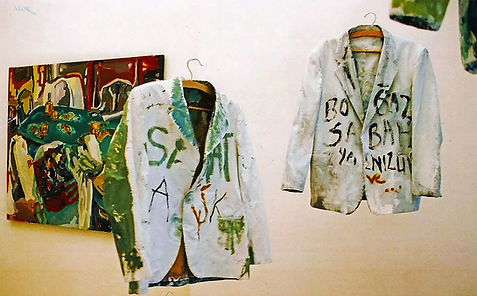

Merging the calm of Çengelköy mornings with the psychological tensions of solitude and migration, this work transforms personal experience into collective reflection. The jackets serve as symbolic vessels of inner values and urban belonging. Within CENE, private observation is elevated into universal narrative, framing migration not only as physical movement but also as an inner negotiation. I'll Take My Jacket And I'will Go Let The Last Comer Close The Door! Installation

The City's Streets Installation (2001) The City's Streets Installation by Göknil Gümüş Sungurtekin , 2001, Turkey, Installation, Oil on Fabric, Size: 70 W x 100 H x 20 D cm,
This work turns the experience of being lost and found in Istanbul’s streets into an existential question: “Should one leave or stay?” The jackets embody change, uncertainty, and belonging. CENE’s multi-layered narrative reframes individual memory within the context of urban transformation and social resilience, rendering it a universal dilemma. I'll Take My Jacket And I'will Go Let The Last Comer Close The Door! Installation
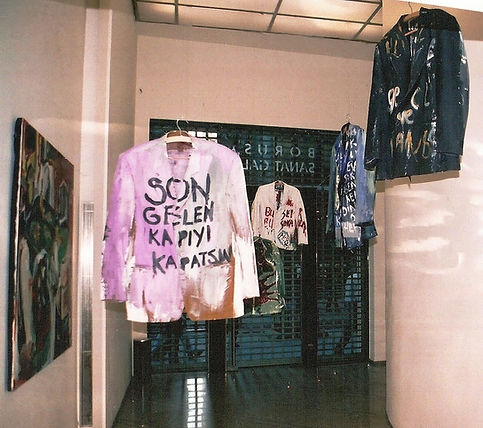
Let the Last Comer Close the Door! (2001) Let The Last Comer Close The Door! by by Göknil Gümüş Sungurtekin , 2001, Turkey, Installation, Oil on Fabric, Size: 70 W x 100 H x 20 D cm.

As the framing piece of the series, this work addresses migration not merely as physical movement but as a metaphysical inquiry into identity and belonging. The jackets act as archetypal vessels of memory and values. One side of the jacket bears the inscription “Let the last comer close the door,” while the front reads: “To leave or to stay? Is leaving difficult, or is staying more difficult? Is it harder to be myself?” These textual interventions anchor the work in existential questioning, rendering the garment both object and statement. Within CENE, personal biography transforms into the universal dilemma of “to leave or to stay,” while the poker-game metaphor dramatizes the risks, uncertainties, and fateful dimensions of migration. I'll Take My Jacket And I'will Go Let The Last Comer Close The Door! Installation
6. Abstract – Figurative – Spatial – Energetic Expression Conceptual Commentary
This category examines how the approach of Conceptual Essence Narrative Expressionism (CENE) transforms abstraction, figuration, spatial perception, and energetic dynamics into an integrated artistic language. The selected works explore the interplay of memory, vibration, color, movement, and sound, transcending representational imagery to reveal the inner structures of perception and resonance. Through expressionist brushstrokes, layered surfaces, and rhythmic compositions, CENE converts subjective experience into universal metaphors of transformation. Abstraction emerges not as an escape from reality but as a deeper engagement with its energetic and spiritual dimensions, where personal memory and intuitive perception intersect with collective symbols. In this sense, CENE functions as both a visual and conceptual inquiry, reframing color, form, and space as vehicles of essence and narrative energy.
6.1 ) Color Theory I Painting (2001)
Color Theory I by Göknil Gümüş Sungurtekin , Turkey, Painting, Oil on Canvas, Size: 140 W x 160 H x 3 D cm,
This abstract work explores color as an autonomous medium of meaning, liberated from representational function. Drawing on the legacies of German and American Expressionism while echoing Van Gogh’s and Kandinsky’s insights, Sungurtekin employs rhythm, contrast, and vibrational intensity to reveal color’s spiritual and emotional potential. Within the framework of Conceptual Essence Narrative Expressionism (CENE), the painting embodies the “energy” dimension of the triadic model—energy, essence, and narrative. Here, narrative emerges not through figuration but through the pure resonance of color, where rhythm and frequency become vehicles of conceptual and spiritual expression. As an early articulation of Sungurtekin’s personal color theory, the work marks a pivotal experiment in liberating color from descriptive constraint, laying the groundwork for CENE’s intuitive, energetic, and abstract visual language.

6.2 ) Previous Home Series II
WORKS ON PAPER – "Previous Home Series II" by Göknil Gümüş Sungurtekin, Turkey Painting, Oil on Paper, Size: 110 W x 150 H x 2 D cm, Previous Home Series, Held in a private collection, Turkey
This work captures a lyrical childhood memory: the artist’s sister cycling in circles in the family garden at Beylerbeyi. What begins as a simple, intimate scene transforms into a metaphor for the cyclical flow of life.
Within the framework of Conceptual Essence Narrative Expressionism (CENE), personal memory is translated into figurative-energetic abstraction, where the circular motion becomes both physical and metaphysical—linking the immediacy of lived experience with the universality of time. Dynamic brushstrokes emphasize rotational energy, while a warm and nostalgic palette fuses memory with temporal continuity.
As an early articulation of CENE’s principles, the work exemplifies the transformation of personal essence into universal metaphor. Echoing Tolstoy’s “bicycle” metaphor, it situates childhood memory within a broader philosophical inquiry, marking the foundational roots of Sungurtekin’s narrative-expressionist practice.
6.3) The Mad Man with Moped – Series (2002–2017)


